

Cara Waterfall has won the 2026 Coniston Prize from Radar Poetry for her sequence Afterlives, selected by Carolyn Forché.
Five poems. Medusa, Ariadne, Antigone, Penelope. Old myths carried into hospitals, laundromats, forecasts, and all the odd machinery of contemporary life. Women who were handed a story and wrote their way out of it, set down in the places where we actually do our living and our dying.
Read Afterlives at Radar Poetry →
We knew how lucky we were to be looking after Cara’s words. It’s a particular joy to watch other people find out.
This isn’t Cara’s first time at the Coniston table. She’s been a finalist before, more than once, and she’s had poems take first place in Room’s 2020 Poetry Contest and the Magpie Award for Poetry, and land on the CBC Poetry Prize shortlist. Her work has appeared in Best Canadian Poetry, The Fiddlehead, and Room. Winning it with a Forché pick feels like a long, patient year arriving all at once.
The Lost Stations is open for pre-order
Cara’s collection The Lost Stations publishes with Ink & Ribbon Press this November, and pre-orders are open now.
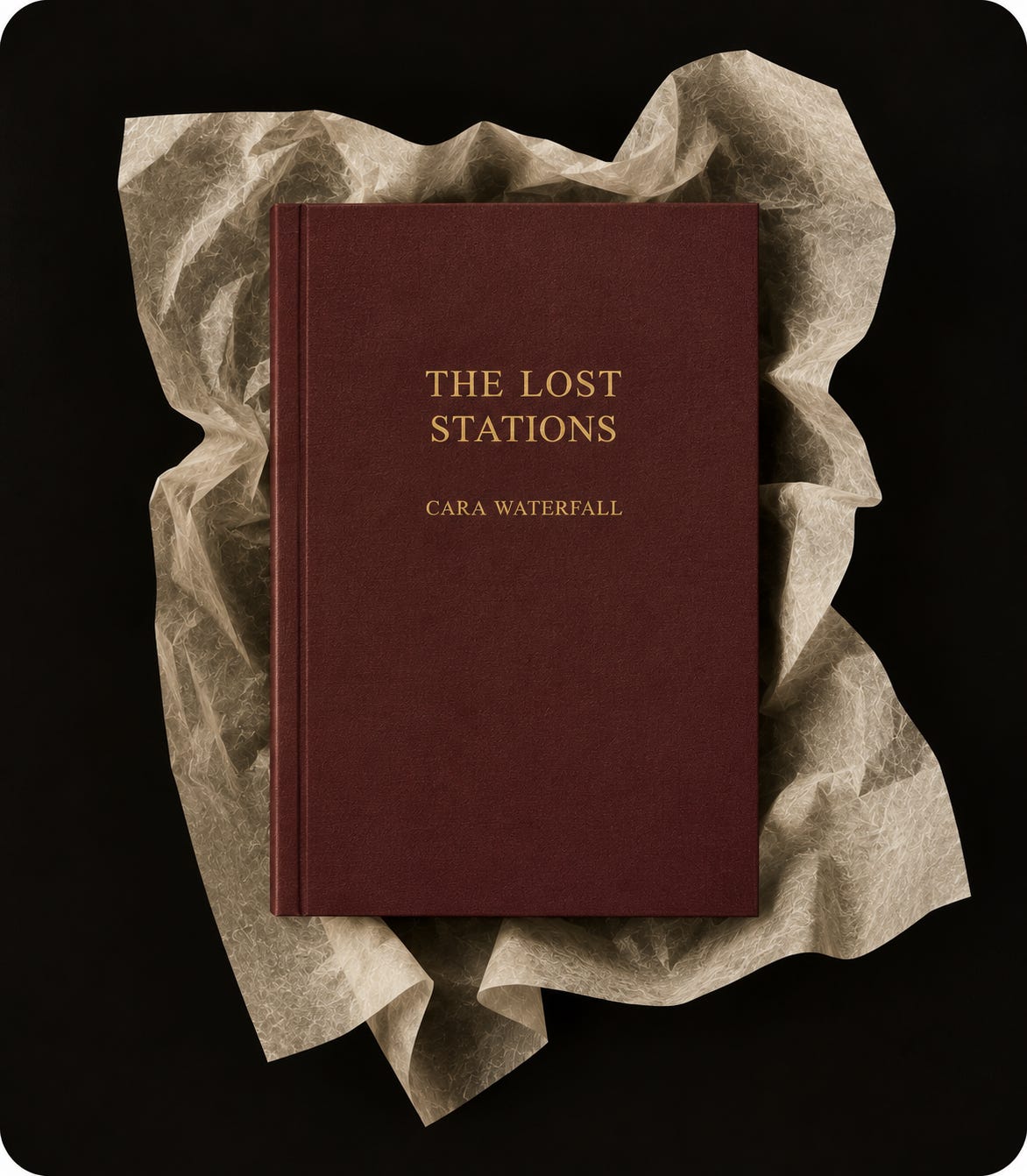
It takes its name from the old rail stops along Toronto’s Beltline Trail, the ones Cara once walked with her father, now overgrown or nearly gone. Those platforms become the way the whole book thinks about loss: what the ground holds on to once the trains stop, and who we were when we stood waiting there. The poems move in three parts, Traces, Vessel, and Tracks, and they take their shapes from centos, contrapuntals, duplexes, even a palindrome poem that folds back on itself the way grief does.
This is a limited edition, hand-numbered, and we’re printing only 250 copies. When they’re spoken for, that’s the edition. Your copy will carry its own number, and it’ll be yours.
The Lost Stations
Cara Waterfall
Limited edition paperback, hand-numbered, 250 copies
$18.95
Pre-order your numbered copy →
Read three sample poems →
Huge congratulations, Cara. Very, very well deserved. We can’t wait for readers to hold The Lost Stations in their hands.
More soon,
G. K. Allum